



/ Strategy

/ Identity

/ Build

A full brand, built with AI at every step. Left alone it drifts to generic. So I kept a hand on the wheel.

AI BRANDING CASE HISTORY

Built with AI. Not by AI.

Bruno De Figueredo

Made by Bruno De Figueredo

Connect on LinkedIn

The tools behind every step

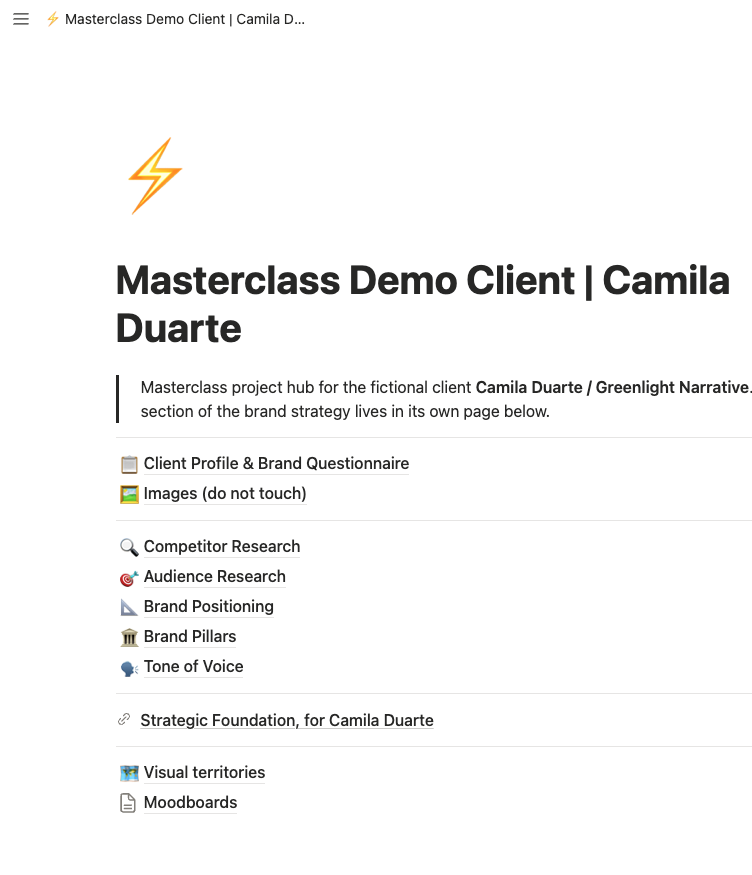
Notion
Claude
ChatGPT
Perplexity
Gemini
Midjourney
Weavy
Recraft
Figma
FontForge
It Replaces You
One Prompt, Done
No Skill Needed
Anyone Can Do It
Creativity Is Dead

The Hidden Truth About AI

The project

A Whole Brand, Made With AI.

This is the story of building Camila Duarte's brand from scratch: the strategy, the logo, a custom typeface, a brand kit, a campaign, and a live site. All of it made with AI, but not by AI. I stayed in the driver's seat the whole way. Here's the full process, one step at a time, with an honest look at what worked and what didn't.

The method

Every Step, Never Solo.

Not AI working alone. Not me working alone. Every phase of this project ran through both, back and forth, in cyborg mode.

Step 1Research
NotionClaudePerplexityChatGPT

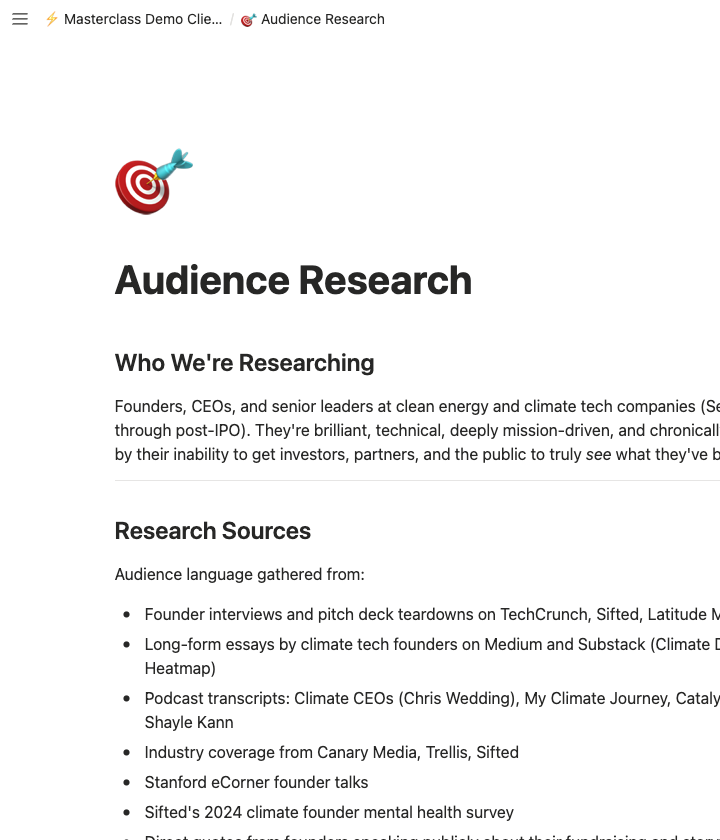
The category's white space, mapped by three AIs into Notion.

Competitor and audience research with Perplexity, Claude, and ChatGPT, all collected into Notion. Notion and Claude were wired together through MCP, and a Claude Project held the standing rule to always build on these documents for context. Work that once needed entire teams, or simply wasn't possible, now takes minutes with the right tools.

What Worked

MCP let Claude and me edit the same Notion docs at the same time, and the Claude Project kept every chat grounded in them.

What Didn't

No single source was safe to trust. Every finding still had to be checked by hand.

Step 2Strategy
NotionClaudeClaude Codecode

A positioning found in the competitor gap, shipped as a live site.

With AI we read the entire competitor set and found where they all blurred together, the space none of them owned. That gap became Camila's positioning: five pillars and a voice, handed over not as a deck but as a full live microsite, structured with Claude and shipped with Claude Code.

What Worked

Notion and Claude connected directly, so the strategy stayed editable and Claude and I could work it at the same time.

What Didn't

Full context kept things coherent but explored less. Context is a dial, not a bucket.

Step 3Moodboard
Claude CodecodeMidjourneyWeavyGeminiFigma

A Claude skill that gathered the moodboard references on its own.

A Claude skill scouted references autonomously, pulling from Behance, Pinterest, and more by the strategy's own keywords into ready-made moodboard folders. From there colors and fonts were explored with Midjourney, Weavy, and Gemini and composed in Figma.

What Worked

The skill gathered references on its own from the strategy's keywords, dropping whole moodboard folders onto disk.

What Didn't

Its eye was unreliable. A lot of what it pulled was off, and plenty had to be cut by hand.

Step 4Logo
WeavyRecraftFigma

A logo branched into variants by AI, then finished by hand.

An exploration that started from a spread of references mixed with my own ideas, branched into variants in Weavy's node canvas and vectorized in Recraft. A back and forth that got the mark almost there, before I finished it by hand in Figma.

What Worked

Mixing my own directions with the references, Weavy branched them into real variants most of the way to a finished mark.

What Didn't

The generated marks came out too clean and symmetric. The organic feel only came from finishing by hand in Figma.

Step 5Custom Font
GeminiRecraftFigmaClaude CodecodeFontForge

Duartia: a full typeface, generated from the logo's seven letters.

The logo carried only seven letters, so the rest of the alphabet was generated from them with Gemini, uppercase and lowercase in two high-res passes, then vectorized in Recraft and cleaned up in Figma. Claude planned the build and Claude Code compiled the glyphs into a real OTF with FontForge.

What Worked

Claude Code drove the whole build and handed back a PNG proof of the full alphabet each round, about ten passes of fixes.

What Didn't

It shaped every letter but had no feel for spacing or kerning, and the FontForge pass to fix that is still not done.

Step 6Brand Kit
Claude DesigndesignClaude Codecode

A complete brand kit, generated by Claude Design in one pass.

A reusable brand kit generated straight from the identity, out of Claude Design.

What Worked

Claude Design read the finished identity and generated a matching component kit in one pass.

What Didn't

The output was on-brand technically, off-brand in feel. Adjusted by hand to actually match.

Step 7Poster & Social
GeminiFigma

Posters and social generated with AI, staged into mockups and motion.

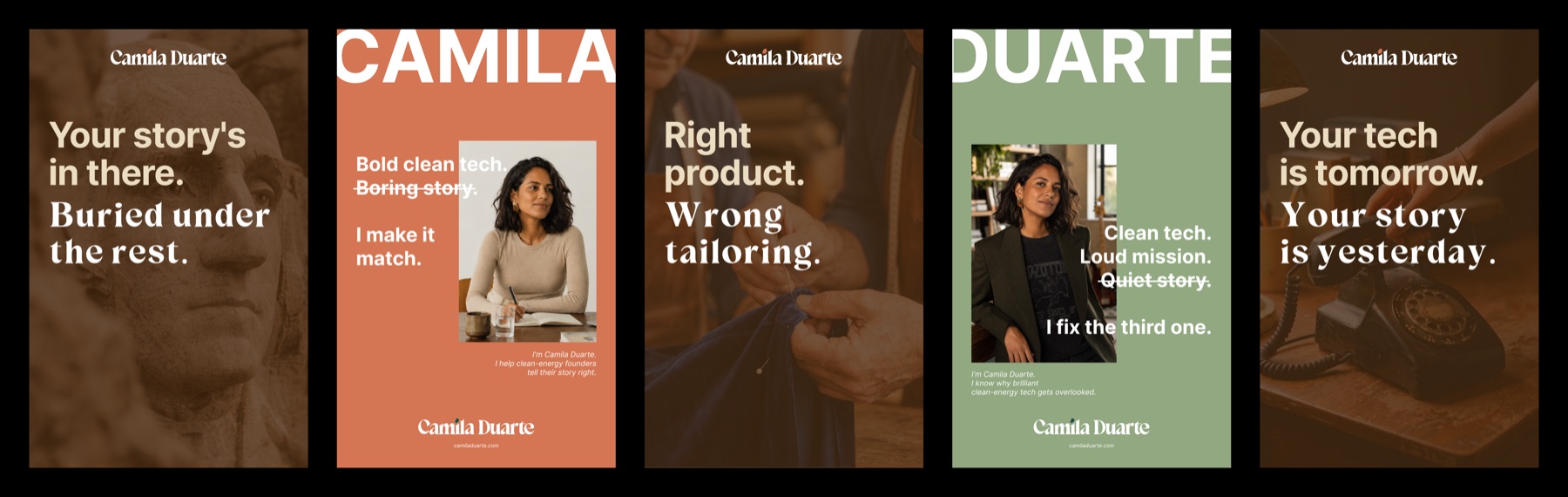
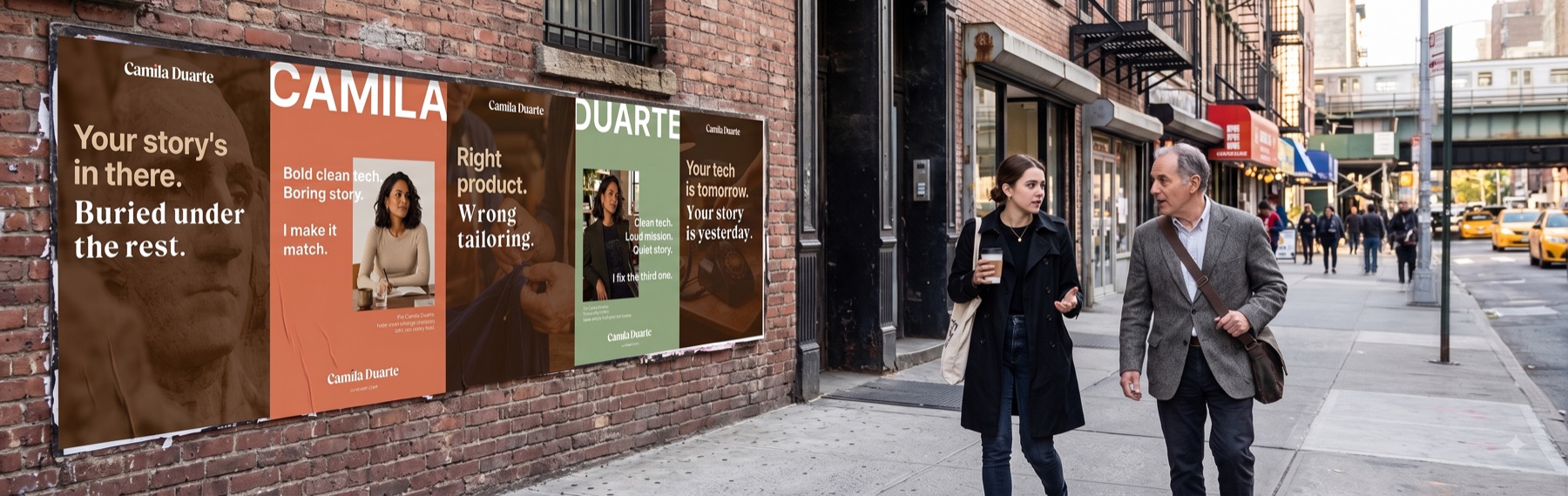
A poster and social campaign generated with Gemini and composed in Figma, then turned into ambient mockups and an animated cut, quick to make and easy to present.

What Worked

Spinning the flat posters into ambient mockups and a motion cut was fast, and far more convincing to show the work.

What Didn't

Left alone, it often generated concepts too similar to one another, and kept adding copy to fill space. Pulled back by hand to vary the directions and let the image carry it.

Step 8Animation
MidjourneyGemini

The logo, brand, and images animated by AI, with no keyframes drawn.

Logo and brand motion generated with Midjourney and Gemini, and the same on still photos, spun into short video clips.

What Worked

Midjourney and Gemini animated the mark convincingly with no manual keyframing.

What Didn't

Motion burns through tokens fast. Without knowing exactly what you want, and which tool fits that specific case, the cost of iterating runs away quickly.

Step 9Website
Claude DesigndesignClaude Codecode

Once the brand was set, the site was built and shipped live, no coding.

With the brand defined, the whole site was designed in Claude Design and built with Claude Code, then pushed live by Claude Code through GitHub and Vercel. All without writing a line of code.

What Worked

Claude Design's structure handed straight to Claude Code, no translation layer in between.

What Didn't

The AI's first draft still sounded like AI. Not every line, but there's always a pass of touch-ups by hand.

The output

A Full Brand, Built With AI.

Three pieces of it, from a sketch to a shipped site.

A logo, drawn first, then generated.

Started as a hand sketch, then explored in Weavy's node canvas, vectorized in Recraft, and finished by hand in Figma.

A custom font, then a campaign to prove it.

The logo's lettering became a full custom typeface with Claude Code and FontForge, then a poster and social campaign generated with Gemini and composed in Figma and Claude Design.

A whole ecosystem, not just a site.

Not just the site, but a whole system of assets: the identity, a reusable design kit out of Claude Design, and the live site itself, all built with Claude Code.

Your turn

Want to build a brand in cyborg mode?

This project was built inside the AI for Branding Masterclass at House of GAI, taught by Anthony Wood. The next cohort is where you learn the method.

Join the next cohort